



Dealing with Imposter Syndrome when job-hunting
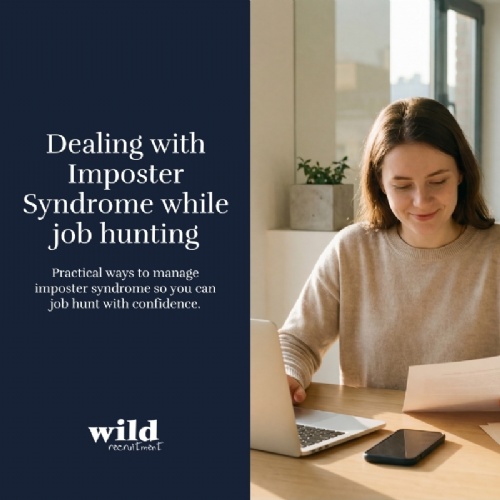
Imposter syndrome shows up quietly when people start job hunting. You can have years of experience, solid achievements, and strong feedback, yet still feel like you’re “not quite good enough” for the roles you’re applying for.
It’s more common than most job seekers realise, and it can hold people back from opportunities they’re absolutely capable of succeeding in.
This blog breaks down why imposter syndrome appears during a job search and offers practical ways to manage it so you can apply with confidence.
What imposter syndrome looks like in job hunting
Imposter syndrome often shows up as a quiet, internal narrative rather than an obvious problem. In a job search, it can sound like:
“I’m not experienced enough for this role.”
“Other candidates will be better than me.”
“My experience doesn’t really count; other people have done more.”
“I don’t deserve to aim for roles at this level yet.”
For many job seekers, these thoughts appear despite having solid experience and real achievements. It’s not a lack of ability; it’s a psychological pattern where you underestimate your strengths and overestimate everyone else’s.
In recruitment, we see this most often when candidates apply for roles that feel like a step forward, when they’re returning to work after a break, or when they’ve had a confidence-knocking experience in a previous job. The feeling is common, but it’s rarely accurate.
How it affects job search behaviour
Imposter syndrome doesn’t just affect how people feel; it affects how they act during a job search. Typical behaviors include:
- Under-applying: Candidates rule themselves out of roles they’re fully capable of doing because they assume they won’t be chosen.
- Over-editing CVs: Constantly rewriting or stripping out achievements because they ‘don’t sound impressive enough’.
- Avoiding interviews: Feeling unprepared or convinced they’ll ‘mess it up’, even when they’re a strong match.
- Downplaying strengths: Giving modest, vague answers that don’t reflect their actual skill level.
- Staying in the wrong job: Choosing comfort over growth because applying elsewhere feels too intimidating.
From a recruiter’s perspective, this can mean great candidates never reach the opportunities they deserve - not because they lack ability, but because self-doubt is steering their decisions.
Practical ways to manage it
You can’t eliminate imposter syndrome overnight, but you can manage it with simple, evidence‑based steps:
- Collect your proof. Keep a running list of achievements, positive feedback, successful projects, and skills you’ve developed. When doubt appears, refer back to the facts.
- Match yourself to the job description realistically. Most candidates don’t meet 100% of the criteria. Focus on the skills you do bring.
- Practice talking about your strengths out loud. Confidence grows through repetition, not perfection, so talking about your strengths to yourself or to a friend or family member can help build you up.
- Limit comparison. You only see other candidates’ highlights - not their doubts, weaknesses, or learning curves - so try to avoid comparing yourself to others.
- Ask for an external perspective. A recruiter, mentor, or colleague can help you see your abilities more clearly than your inner critic does.
These small shifts help you move from “I’m not good enough” to “I’m capable, and I’m still learning”.
How a recruiter can help
A good recruiter doesn’t just match you to roles; they help you see your value clearly.
Here’s how:
Objective feedback
Recruiters look at your experience without the emotional filter. They can tell you where you’re strong, where you’re competitive, and where you’re selling yourself short.
Realistic role matching
They know what employers actually look for, which often differs from what candidates assume.
Interview preparation
Guidance on how to talk about your achievements confidently and authentically.
Market insight
Understanding salary ranges, skill demand, and hiring trends helps reduce uncertainty - a major trigger for imposter syndrome.
Encouragement grounded in evidence
Not empty reassurance, but confidence built from your real skills, experience, and potential.
For many job seekers, having someone in their corner makes the difference between hesitating and progressing.