



Why choose a HGV or Delivery Driver career
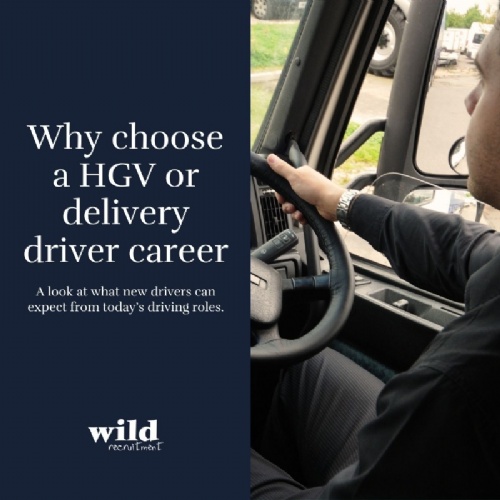
If you’ve been considering a job change or looking for a new career, professional driving is an industry worth paying attention to.
With a UK driver shortage estimated at 30,000–45,000, demand for both skilled and new drivers remains high, creating real opportunities for many workers.
This blog explores why the timing has never been better to enter the industry, and what new drivers can expect from today’s driving roles.
Demand is high and it’s not going anywhere
The UK’s driver shortage isn’t a short-term spike. It’s the result of long-term trends: an ageing workforce, a lack of young workers entering the industry, and increased logistics demand and last-mile delivery.
For job‑seekers, that translates into:
- More vacancies across multiple sectors, from logistics and retail to manufacturing, waste management, and specialist transport.
- Better job security; driving roles remain essential, even during economic uncertainty.
- Opportunities for new entrants; many employers are now open to training and supporting people who are new to the industry.
If you’re looking for a career with longevity, driving offers exactly that.
A career that suits different lifestyles
Driving isn’t one-size-fits-all. Whether you want full-time hours, part-time shifts, nights, days, or weekend-only work, there are roles that fit different lifestyles and commitments. Below are some of the driving options in the industry and guidance on how to started:
HGV Class 1 and 2
Most new HGV drivers start with Cat C (Class 2) licence, which covers rigid, fixed unit vehicles, before progressing to Cat C + E (Class 1), allowing them to drive articulated lorries. Training typically includes a medical, theory test, hazard perception, CPC modules and practical training.
Van and multi-drop delivery
These roles usually require a standard UK driving licence and a clean record. Employers often provide route training, manual handling guidance, and vehicle familiarisation. It’s one of the quickest ways to enter the industry, and a great stepping stone if you’re considering progressing to larger vehicles later on.
Specialist driving (ADR, HIAB, refuse, etc.)
These roles require additional qualifications such as ADR certification for hazardous goods or HIAB training for lorry-mounted cranes. Many drivers gain these once they’ve built confidence in a standard HGV role.
This flexibility makes driving a realistic option for people returning to work, changing careers, or looking for a role that offers variety.
Looking for your next career?
If you’re looking for a career that offers stability, progression, and real opportunity, professional driving is a strong option. The industry is evolving quickly, employers are investing more in their people, and opportunities are available for both experienced drivers and complete newcomers.
Whether you’re ready to take the next step or simply exploring your options, Wild Recruitment can help you find a role that fits your skills, lifestyle, and long-term goals.